Answer Engine Optimization (AEO) and Generative Engine Optimization (GEO) are related but distinct disciplines within the modern search landscape. While AEO focuses on providing concise, direct answers to specific user queries, GEO involves optimizing content to be synthesized and cited by large language models during the generative response process.
Over the last twenty years, I’ve watched the search industry transform from simple keyword matching to complex semantic understanding. Today, we are standing at the threshold of another massive shift: the rise of the "answer" as the primary unit of currency in search. You might be hearing terms like AEO, GEO, and LLMO thrown around as if they are interchangeable, but in my experience, treating them as identical is a strategic mistake. If you are an enterprise leader or a dedicated practitioner, understanding the nuance between these two is the difference between being a footnote and being a primary source.
When we talk about Answer Engine Optimization, we are looking at the evolution of "zero-click" searches and the immediate satisfaction of user intent. On the other hand, Generative Engine Optimization is about the architecture of influence within a synthetic response. In this article, I’m going to break down why these two concepts are often confused, where they actually diverge, and how you can build a sustainable strategy that satisfies both. We’ll explore the technical requirements, the shift in content structure, and the ethical considerations of optimizing for machines that think. My goal is to help you move past the jargon and into a framework that protects your long-term visibility. By the time we finish, you’ll have the clarity needed to decide where to allocate your resources as platforms like Perplexity and Google Gemini continue to rewrite the rules of discovery.
Key takeaways
Understanding the differences between AEO and GEO is essential for any digital strategy aiming for long-term resilience in an AI-first world.
-
Distinct Objectives: AEO prioritizes the "Direct Answer" for specific queries, while GEO focuses on being a foundational "Citation Source" for complex generative summaries.
-
Structural Differences: Answer optimization relies heavily on Schema and microdata, whereas generative optimization requires authoritative, entity-dense narrative content.
-
Metric Shift: Success in this new era moves away from simple clicks and toward brand mentions, citation frequency, and sentiment within AI-generated responses.
Defining the Foundation: What is Answer Engine Optimization?
Answer Engine Optimization is a discipline I’ve seen mature alongside the rise of voice search and mobile-first indexing. At its core, AEO is about being the definitive answer to a specific question, typically one that starts with who, what, where, when, or why. Think of the "Featured Snippet" in Google; that is the holy grail of AEO. It requires a laser focus on factual accuracy and structural clarity so that a search engine can confidently lift your text and present it as the solution. In my two decades of work, I’ve found that AEO is less about persuasion and more about utility. It’s about reducing the friction between a user’s curiosity and the information they need.
AEO vs. Traditional Optimization
Note: On smaller screens, swipe left/right to view all table data.
To succeed in AEO, your content must be structured in a way that machines can parse without ambiguity. This usually means adopting an "answer-first" writing style, where the most important information is delivered immediately. I often advise my clients to look at their top-performing informational pages and see if the "TL;DR" (Too Long; Didn't Read) section is prominent enough. If a machine has to dig through three paragraphs of fluff to find the answer to "how much does WiFi 7 cost," you’ve already lost the AEO battle. It’s a game of precision, where the clarity of your data outweighs the creativity of your prose.
The Next Frontier: Understanding Generative Engine Optimization

While AEO deals with direct answers, Generative Engine Optimization (GEO) is a much broader and more complex beast. GEO is the practice of optimizing content so that it is included, synthesized, and cited within responses generated by Large Language Models (LLMs). This isn't just about providing a single fact; it's about providing the context and authority that an AI needs to construct a multifaceted response. I view GEO as the marriage of traditional SEO authority-building and modern data science. It’s not enough to be "correct"; you have to be "essential" to the model’s understanding of a topic or entity.
- Entity Association: Clearly linking your brand or topic to established digital entities.
- Citation-Worthiness: Writing unique insights that AI models feel compelled to credit.
- Semantic Depth: Using a rich vocabulary that covers the "why" and "how" of a subject.
- Source Reliability: Maintaining a high standard of factual consistency across the web.
The shift to GEO represents a move from "ranking" to "inclusion." In the old world, we fought for blue links; in the GEO world, we fight to be the source mentioned in a Gemini or ChatGPT summary. I’ve noticed that models tend to favor sources that offer unique perspectives or primary data that isn't found elsewhere. This means that if you are just rehashing the same information as everyone else, you might get picked up by an answer engine, but you won't be a pillar of a generative response. GEO requires a deep commitment to topical authority and a narrative that humans find useful and AI finds reliable.
The Crucial Differences: AEO vs. GEO Compared
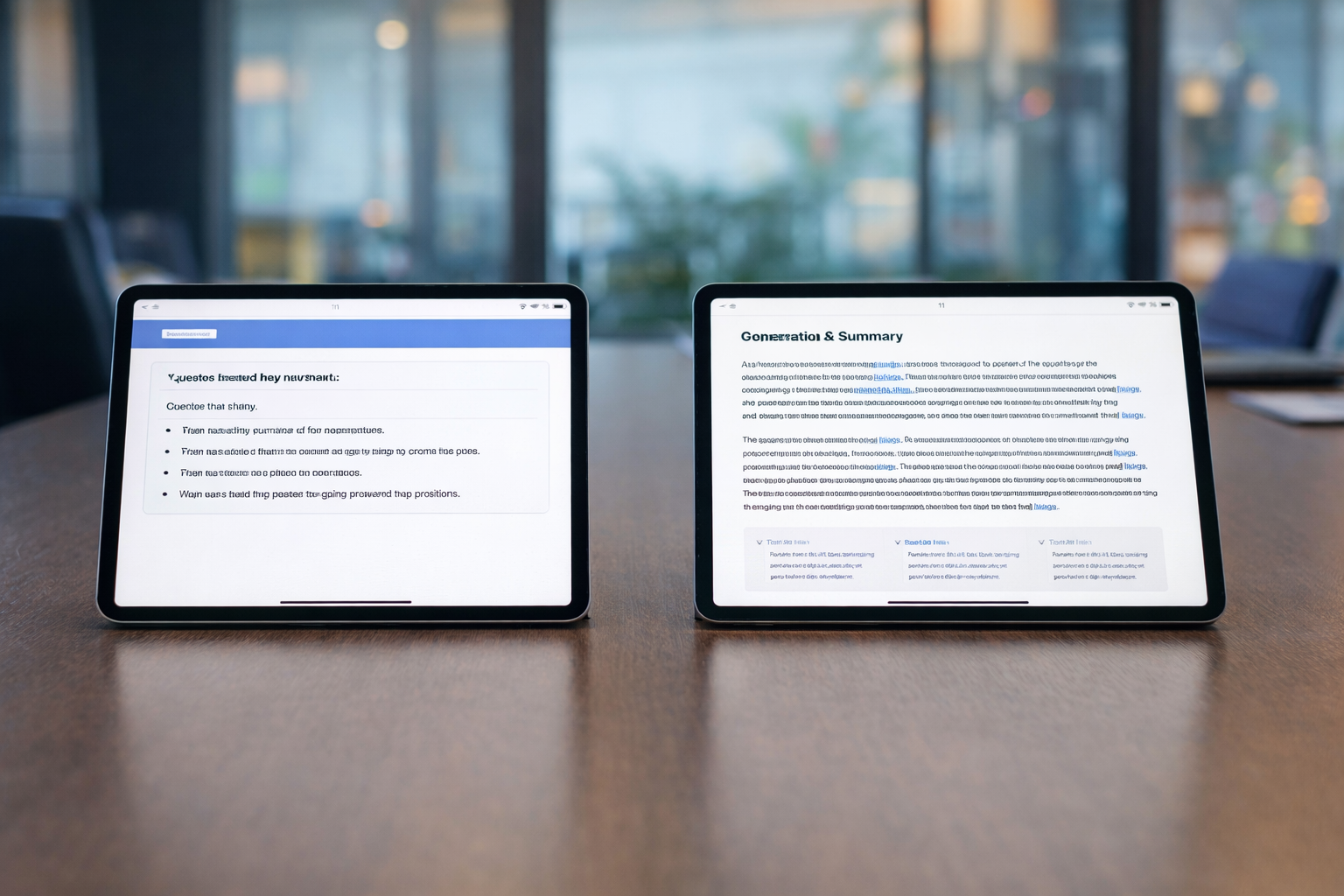
The most significant difference between the two lies in the "retrieval vs. generation" logic. AEO is largely a retrieval task—the engine finds the best existing block of text and shows it. GEO is a generative task—the engine reads multiple sources and creates something new. From my perspective, AEO is about the destination, while GEO is about the influence. If you provide a direct answer for "what is the FCC," you are doing AEO. If you provide a nuanced analysis of how FCC regulations impact 6GHz spectrum availability that an AI uses to explain WiFi 7's benefits, you are doing GEO.
- Query Complexity: AEO handles simple, factual queries; GEO handles open-ended, subjective, or multi-step queries.
- Content Length: AEO thrives on brevity (the 50-word answer); GEO rewards depth and comprehensive coverage.
- User Interaction: AEO is often the end of the journey (zero-click); GEO is the start of a conversational exploration.
- Ranking Signals: AEO relies heavily on on-page formatting; GEO relies on brand authority and "mention-worthiness" across the broader web.
I often tell my peers that AEO is a subset of GEO. You can't have a great generative strategy without being able to answer basic questions, but you can certainly have an answer strategy that fails to influence the broader generative narrative. As search engines evolve into "discovery engines," the focus shifts from being the only answer to being the trusted source that the AI uses to build its worldview. This distinction is vital for resource allocation; if you only optimize for the "snippet," you may find your traffic disappearing as AI Overviews begin to synthesize that information without sending a click your way.
Strategic Alignment: How to Optimize for Both Simultaneously
The good news is that you don’t have to choose one over the other. In fact, a healthy digital presence requires a symbiotic relationship between AEO and GEO. I’ve found that the best way to approach this is by using a "Modular Content" framework. You write for the human first, but you structure the data for the machine. This means starting your articles with a clear, concise answer block (AEO) and then expanding into a deep, authoritative narrative that provides the "connective tissue" an LLM needs (GEO). This "Answer-First, Depth-Second" approach satisfies the immediate needs of the user while building the long-term authority required for generative discovery.
- Implement Robust Schema: Use FAQ, How-to, and Article schema to make your facts indisputable.
- Focus on First-Party Data: Publish original research, case studies, or unique insights that AI can't find in a training set.
- Optimize for Entities: Ensure your brand is clearly associated with the keywords you want to own through consistent internal linking.
- Build Citation Signals: Encourage mentions from other high-authority sites to signal to the LLM that your content is a "primary" source.
By balancing these tactics, you create a resilient strategy. My approach has always been grounded in execution rather than theory; I test these frameworks on my own sites before recommending them. What I’ve seen is that sites which provide "quick answers" for the bots but "deep insights" for the readers tend to survive algorithmic shifts much better than those chasing one specific hack. It’s about being useful at every stage of the user’s journey—whether they want a five-second fact or a five-minute education. This is how you build a brand that is both trusted by humans and understood by AI.
Frequently asked questions on answer engine optimization
Is AEO a replacement for traditional SEO?
No, AEO is an extension of traditional SEO. While classic SEO focuses on ranking in the ten blue links, AEO specifically targets the "answer" spots like featured snippets and voice search results. You still need the foundational technical SEO to support your AEO efforts.
How do I know if my content is optimized for GEO?
You can test this by prompting various LLMs (like ChatGPT, Claude, or Gemini) with queries related to your niche. If the AI cites your brand or uses your specific terminology and data points in its response, your GEO efforts are working. If it summarizes the topic without mentioning you, you need more "citation-worthy" content.
Do I need a different strategy for Perplexity than for Google?
While there is overlap, Perplexity functions more purely as an "answer engine" that cites sources heavily. Google’s AI Overviews are more of a hybrid. For Perplexity, focus on being the most factual and cited source; for Google, maintain your traditional ranking signals while adding generative-friendly structure.
Does structured data help with GEO as much as AEO?
Structured data is the primary language of AEO. While GEO relies more on natural language processing (NLP) and semantic understanding, structured data still helps the LLM "verify" the entities and facts it finds in your prose, making it a vital supporting tool for both.
Navigating the Future of Discovery with Confidence

The landscape of search is changing, but the fundamental need for high-quality, authoritative information remains the same. Whether we call it Answer Engine Optimization or Generative Engine Optimization, the goal is still to connect a human with a solution. I’ve spent over two decades navigating these shifts, and the most successful strategies are always the ones that prioritize clarity and integrity over shortcuts. By understanding that AEO is your "front door" and GEO is your "foundation," you can build a digital presence that doesn't just survive the AI revolution—it leads it.
As we move forward, I encourage you to look at your content not as a collection of keywords, but as a network of valuable insights. Are you providing the direct answers that solve immediate problems? Are you offering the deep context that defines your industry? If you can do both, you will remain indispensable to both the users clicking your links and the machines generating the answers. If you’re feeling overwhelmed by the technical shifts or the evolving terminology, remember that I am here to help you translate that complexity into action. We are all learning this new language together, and there is immense opportunity for those willing to adapt.
What is one specific question your customers always ask that you haven't yet answered directly on your homepage?